
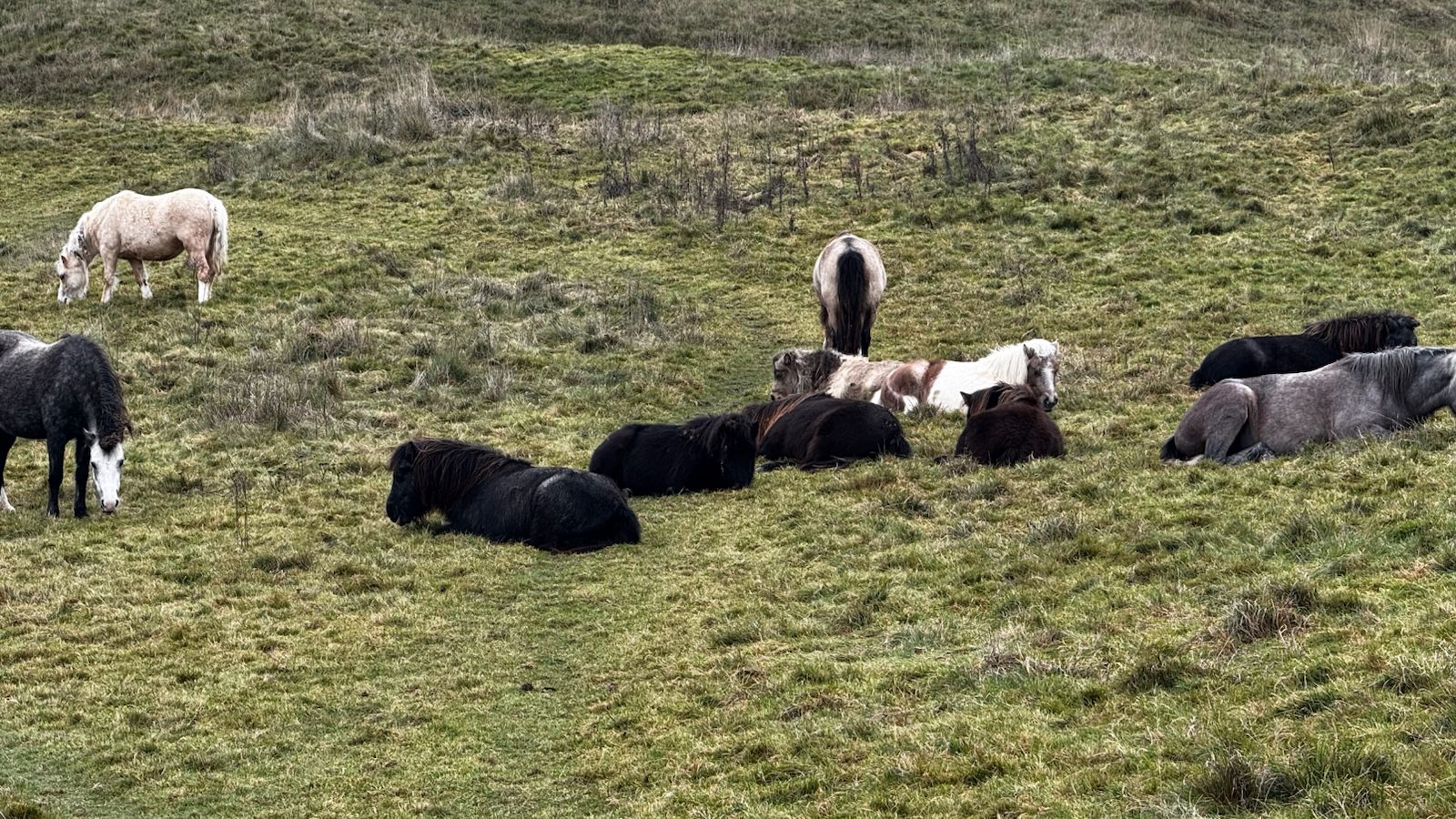
The Cuckmere Ponies are one of the most iconic and beloved features of the South Downs landscape in southern England. Here’s a detailed overview:
What & Where
- What: A herd of semi-feral ponies (usually around 10-20 individuals).
- Breed: They are primarily Exmoor ponies, a rare and ancient native British breed known for their hardiness, distinctive “mealy” muzzle (lighter colour around the nostrils), and a stocky build.
- Location: They roam freely across the Cuckmere Haven and the Seven Sisters chalk cliffs in East Sussex, within the South Downs National Park. You most commonly see them on the west side of the Cuckmere River, on the slopes leading down to the Haven and on the first of the Sisters, Haven Brow.
Why Are They There? (Conservation Grazing)
They are not wild but are carefully managed as a conservation tool. This practice is known as “conservation grazing.” Their specific roles include:
- Maintaining Biodiversity: By grazing coarse grasses, brambles, and scrub, they create a varied “mosaic” of vegetation heights. This allows rare chalk grassland wildflowers, herbs, and insects to thrive.
- Preventing Scrub Encroachment: Without their grazing, the open downland would quickly revert to dense scrub and woodland, which would obscure the famous panoramic views and damage fragile chalk grassland habitats.
- Natural Landscape Management: Their trampling and grazing help maintain the open, rolling character of the cliffs and valleys, which is a historic human-made landscape.
History & Management
- The current herd has been in place since the early 2000s, reintroduced as part of a National Trust and South Downs National Park conservation scheme.
- They are owned by local graziers or conservation organisations but live on the land year-round.
- They are checked regularly by wardens and volunteer “lookerers” for health and wellbeing. They are hardy and well-adapted to the exposed conditions.
Key Things for Visitors to Know
- Iconic Views: They are famously photographed from the Seaford Head viewpoint (looking towards Cuckmere Haven and the Seven Sisters), often appearing in the foreground of that iconic scene.
- Do Not Feed or Approach: This is the most important rule. They are not petting zoo animals. Feeding them can make them dependent on humans, cause illness (their digestive systems are adapted to tough vegetation), and lead to aggressive behaviour. Always admire them from a respectful distance.
- Keep Dogs Under Control: Dogs must be kept on a short lead around the ponies. Loose dogs can stress or chase the ponies, leading to dangerous situations for all.
- Access: You can see them by walking the South Downs Way or the paths from Exceat (Seven Sisters Visitor Centre) or Seaford. They move freely, so sightings are likely but not guaranteed.
- Resilience: Don’t worry if they look a bit muddy or shaggy in winter—their thick coats and hardy nature are perfectly suited to the environment.
Significance
The Cuckmere Ponies have become more than just conservation tools; they are:
- A Living Cultural Landscape: They evoke the historical use of the downs for animal grazing.
- A Tourist Attraction: Their beauty and the scenic backdrop make them a huge draw for photographers, hikers, and nature lovers.
- Ambassadors for Native Breeds: They highlight the importance of rare Exmoor ponies and their role in sustainable land management.
In summary, the Cuckmere Ponies are a working conservation herd whose grazing maintains the stunning, flower-rich chalk landscape that millions come to see. They are a wonderful sight, best enjoyed—and protected—by observing them quietly from a distance.
Want to see them? A walk from the Seven Sisters Visitor Centre at Exceat down to Cuckmere Haven is your best bet.
Leave a Reply